Data marketplace: enabling governed data products at scale
The biGENIUS-X Data Marketplace introduces a structured way to publish, discover, and consume data products across teams and domains. It supports data-contract management, governance validations, and standardized provisioning workflows, helping organizations operationalize data mesh and data product–oriented architectures.
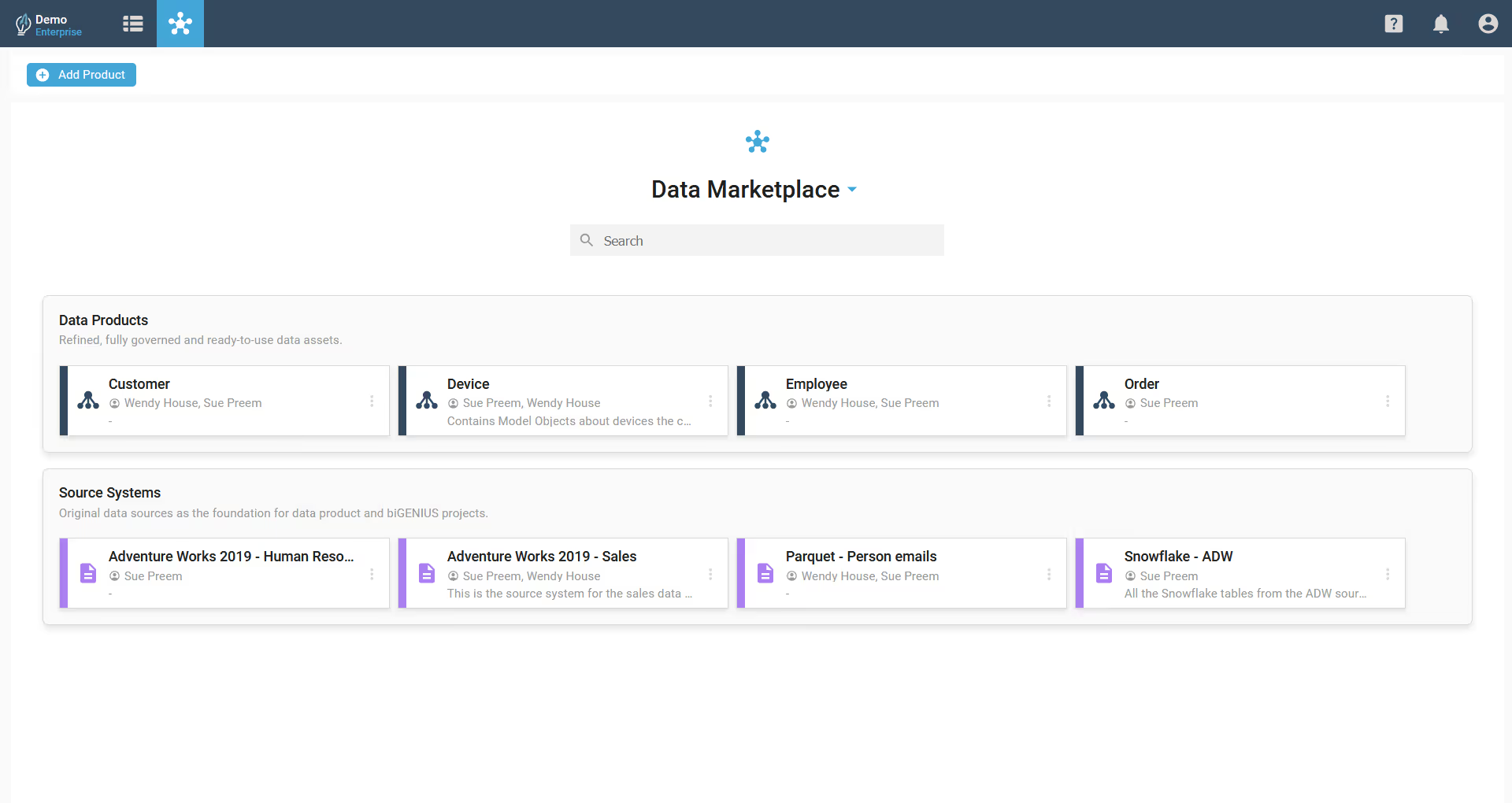
By making data products easier to manage and govern, the Data Marketplace helps reduce friction between producers and consumers while improving transparency and trust.
Learn more about how data automation can bring data products to life in our previous blog post.
Generators
Generators version 1.10
This latest version of generators delivered several important improvements focused on flexibility and operational robustness. Users can now inject custom logic before and after generation, enabling more advanced and environment-specific behaviors without breaking automation principles.
Deployment workflows have been refined, and logging has been enhanced to support troubleshooting, auditing, and operational monitoring.
For full release notes, please refer to the biGENIUS-X generator documentation.
Oracle data vault generator
This new generator adds native support for Oracle-based data vault implementations, extending biGENIUS-X's multi-target capabilities.
Redesigned data quality framework
The data quality framework has been redesigned to provide greater consistency, flexibility, and control across all generators. Quality rules can now be applied more uniformly across models and targets, helping teams enforce data quality standards earlier and more reliably throughout the pipeline lifecycle.
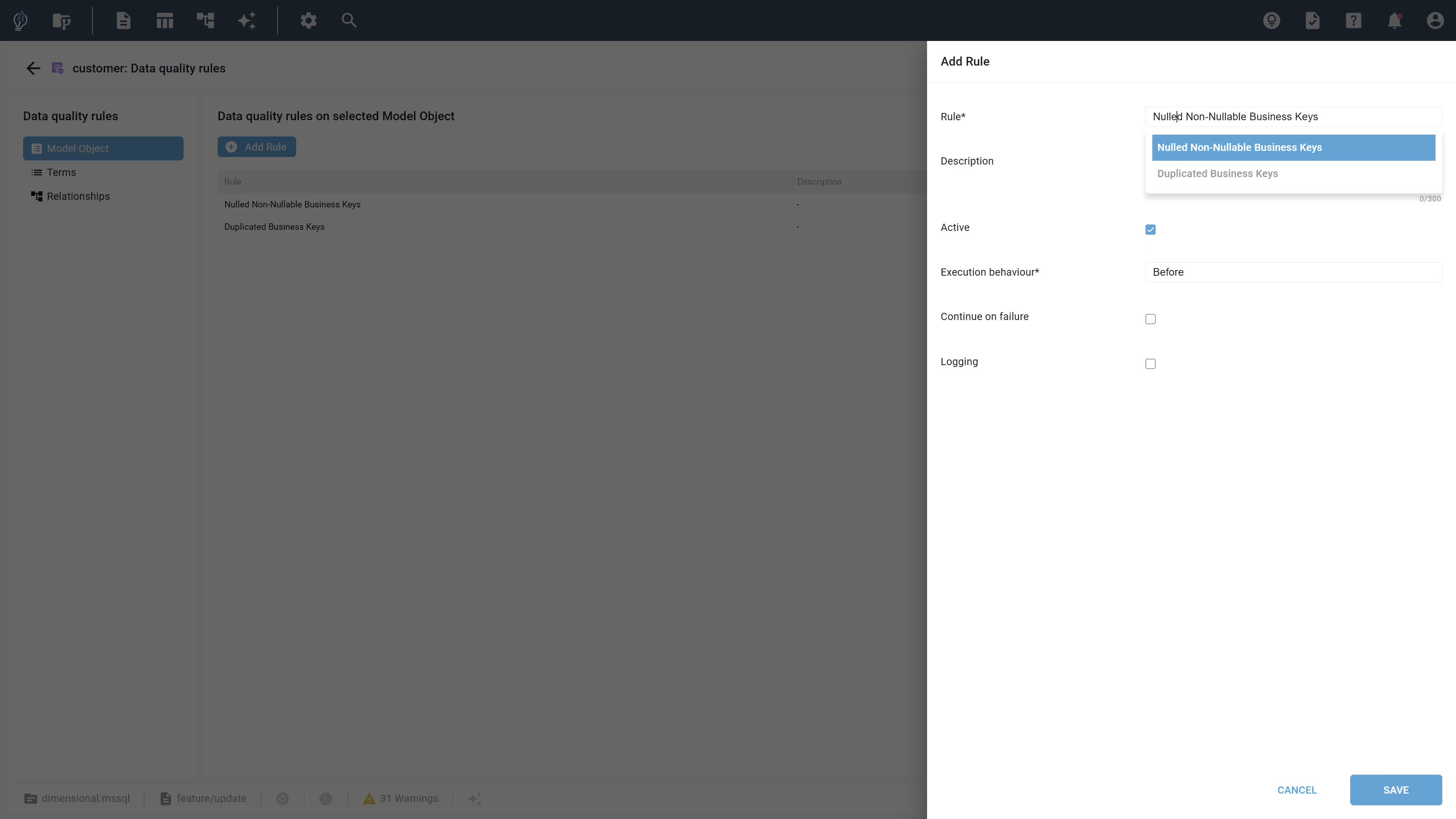
Key improvements include:
- Customizable rules
- Expanded coverage
- Error handling options
- Flexible execution timing
This redesign supports stronger governance while reducing manual effort and duplication. You can read more about the enhanced data quality capabilities in our blog post.
UI-based deployment
Deployment in biGENIUS-X was previously possible either manually or through CI/CD pipelines. Users can automate deployments with the support of our ready-to-use Azure DevOps pipeline tasks (available free in the Visual Studio Marketplace).
To simplify operational workflows, biGENIUS-X now supports UI-based deployments executed directly from the application via connected agents. This provides an alternative to script-based or pipeline-driven deployments and lowers the barrier for teams who prefer a more integrated deployment experience. The result is faster execution, fewer context switches, and improved transparency during deployments.
Graphical modeling of business concepts
With graphical modeling of business concepts, users can define and manage business terminology directly within biGENIUS-X. This creates a structured semantic layer that links business concepts with technical models and transformations.
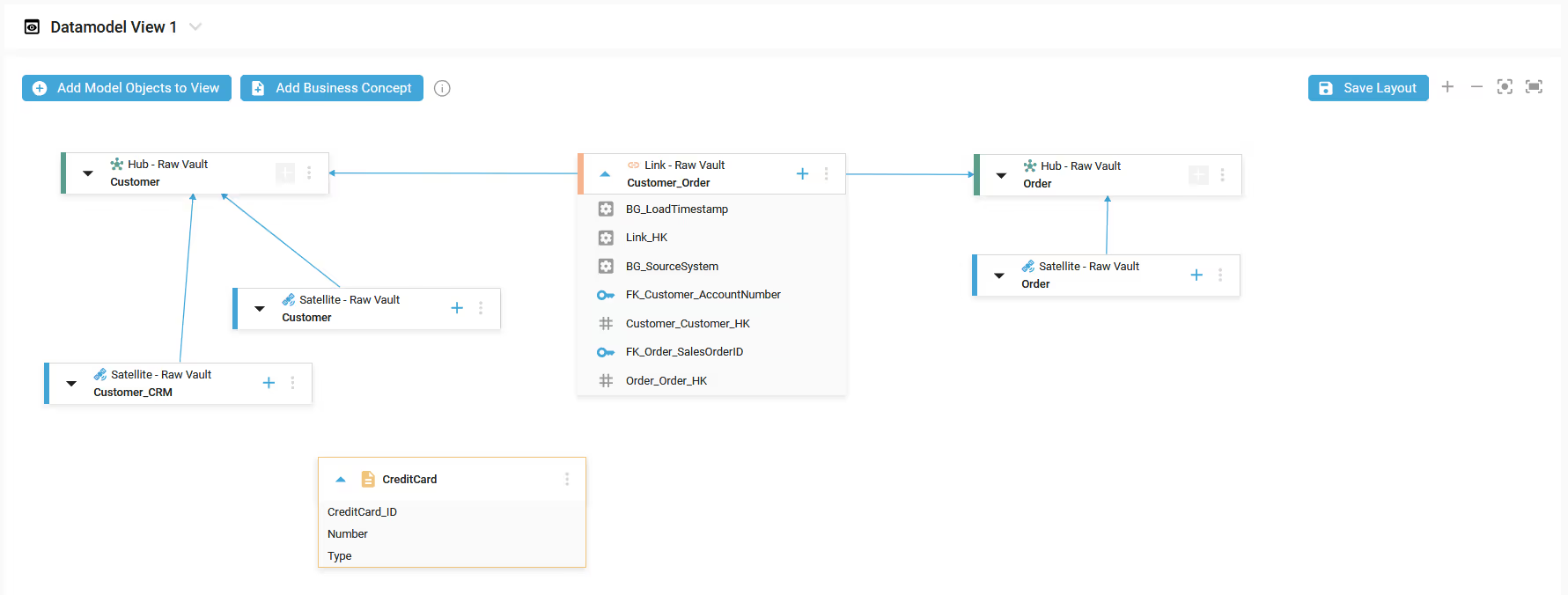
By improving requirement capture and alignment with business stakeholders, this capability helps ensure that downstream data products reflect real business meaning, not just technical structures.
AI capabilities
AI data model proposal
biGENIUS-X AI-assistant Genie can propose model structures in tabular format and visualize recommended model objects. Suggestions can be based on existing project metadata or recognized best-practice patterns for specific domains.
AI term-mapping
This preview-feature that uses AI to automatically map and translate technical or cryptic source system fields such as SAP field names, into business-friendly terminology. It also supports custom instructions, allowing users to tailor mappings, and optimize their workflow with complex source structures.
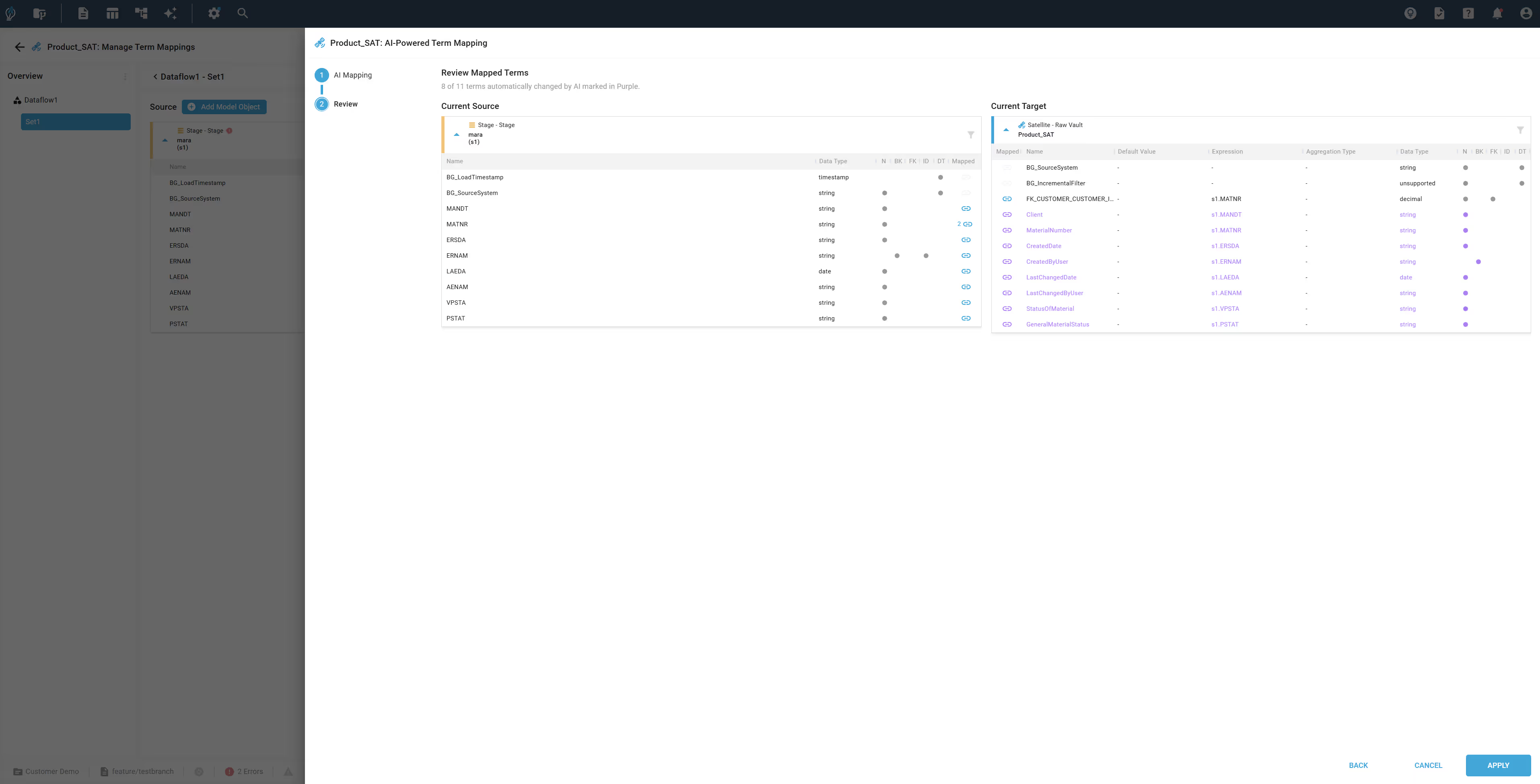
Example: AI term-mapping with custom instruction "Name all technical attributes in business-friendly English"
Looking ahead to 2026
In 2026, development will continue to focus on scaling biGENIUS-X for larger environments, more complex dependency structures, and faster iteration cycles without sacrificing governance or reliability.
Delta deployment
Delta deployment enables teams to deploy only what has changed since the last release, rather than redeploying entire projects. By identifying modified objects and their dependencies automatically, delta deployment significantly reduces deployment times and lowers operational risk. This is particularly valuable in large or distributed environments, where full redeployments can be time-consuming and disruptive.
Cross-project load dependencies
As data platforms grow, dependencies increasingly span multiple projects and teams. Cross-project load dependencies will make these relationships explicit and manageable, ensuring that data products are loaded in the correct order across project boundaries. This improves reliability, simplifies orchestration, and reduces manual coordination between teams.
AI Description Generator
Clear documentation remains one of the most persistent challenges in data engineering. The AI Description Generator analyzes the context of terms, models, and relationships to automatically generate meaningful, business-ready descriptions. By improving consistency and readability, this feature helps teams maintain high-quality documentation with less manual effort.
Together, these enhancements reflect our continued investment in making biGENIUS-X a solution that scales with your organization by supporting faster delivery, safer operations, and better collaboration as data landscapes will inevitably become increasingly complex.
2025 marked an important step forward for biGENIUS-X, strengthening the platform’s ability to support modern, governed, and scalable data engineering practices. We look forward to continuing this momentum in 2026 and beyond.